
Shaping the Future: New Standards Driving Meaningful Change— and SES are at the Forefront
Nicholas Darling
Head of Building Performance, SES
Published by the UK Government (MHCLG) and launched on 24 March 2027, the Future Homes Standard rewrites the rulebook on how new homes are designed and built. It redefines how we design and deliver new homes: low carbon heating, mandatory solar, healthier buildings and major reductions in emissions.
This isn’t just policy uplift — it’s a step change in how people live.
The key headlines speak for themselves:
More information can be found here: https://www.gov.uk/government/publications/the-future-homes-and-buildings-standards-building-circular-012026/the-future-homes-and-buildings-standards-building-circular-012026-letter
For years, ‘net zero carbon’ has meant different things to different people. Clients, developers, architects and contractors have all been working to different definitions, making it almost impossible to verify claims or compare performance across projects.
Version 1 of the UK Net Zero Carbon Buildings Standard changes that. Developed through extensive cross-industry collaboration, it provides the first unified, science-based methodology for defining and verifying net zero carbon buildings in the UK. Its key features include:
This matters enormously for how we report and demonstrate performance to clients. It provides a credible, consistent framework that we can apply across our project portfolio — giving clients the assurance they need that ‘net zero’ actually means something.
More information can be found here: https://www.nzcbuildings.co.uk/the-standard
At SES, we’ve been preparing for this for some time. Our investment in skills, supply chain relationships, and design capability around heat pump technology and low‑carbon building services means we’re not scrambling to catch up — we’re in a position to help our clients navigate the transition with confidence. This is strengthened further by our in‑house Building Performance team, which includes certified Passivhaus and NABERS Assessors, ensuring we can deliver verifiable, high‑performance, low‑energy buildings from design through to operation.
It directly aligns with our purpose of Reimagining places for people to thrive and our three promises:
Thriving Places – Creating resilient, low‑energy places that meet the Future Homes Standard by design, delivering healthier homes, lower running costs, and communities shaped around verified performance, not assumptions. By embedding both operational and embodied carbon requirements from the UK Net Zero Carbon Buildings Standard, we help create places that are sustainable across their full life cycle — not just at handover.
Thriving Planet – Cutting carbon at scale by applying a unified, science‑based methodology for whole‑life carbon reduction. Through innovation in all‑electric systems, fabric‑first design, on‑site renewables and verified net‑zero frameworks, we accelerate climate action across every project and work in genuine partnership with clients, supply chain and industry to drive long‑term decarbonisation.
Thriving People – Building the specialist skills, capability and culture needed for a low‑carbon future. From Passivhaus and NABERS assessors to digital engineering experts and whole‑life carbon practitioners, we’re equipping our workforce — and supporting our clients — to deliver buildings that perform as designed, improve occupant wellbeing, and support the transition to a net‑zero‑ready economy.
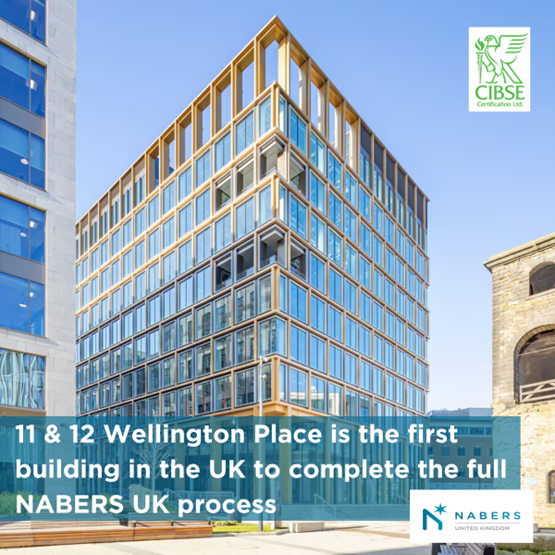
SES has been on an active net zero journey for several years and are embedding whole‑life carbon thinking into the way we plan and deliver projects. This commitment is already being demonstrated through projects such as 11 & 12 Wellington Place in Leeds — one of the UK’s most sustainable commercial developments and one of the first Design for Performance pioneer projects, helping to shape the early adoption of net zero carbon. Delivered with an all‑electric MEP strategy and advanced, fabric‑first design, the buildings have achieved a certified NABERS UK 5‑Star energy rating, BREEAM Outstanding and EPC A, supported by 700m² of rooftop photovoltaics that save over 400 tonnes of CO₂ annually. Through whole‑life carbon analysis, smart energy management and the elimination of fossil fuels, the project showcases the practical, measurable impact of SES’s approach — turning net‑zero ambition into verified in‑use performance.
The launch of the UK Net Zero Carbon Buildings Standard gives us a clear, verified framework against which to measure and report the carbon performance of the buildings we deliver. We’ve already contributed to the development of the standard through participation in early pilot schemes, helping to shape how it will be applied across the sector. This experience is now being put into practice on the DfE CF25 Framework, where the standard will form the basis of the Department for Education approach to delivering Net Zero Carbon Schools. From 2026, as project‑level verification becomes available, we intend to be among the first contractors achieving Net Zero Carbon Aligned Building status on qualifying projects.
But net zero is not just a number on a certificate. It’s a culture — a way of thinking about every design decision, every specification choice, every procurement conversation. It also requires a broader perspective: evaluating whole life cost alongside whole life carbon so that clients can understand the true value, resilience, and long‑term sustainability of the solutions we propose. That cultural shift is already well underway at SES, and the new standards are an opportunity to accelerate it further.
Our job at SES is to lead the way.